In-situ Physical Remediation Methods
If contaminants cannot be destroyed using biological or chemical methods, physical in-situ remediation methods are a viable option. This applies in particular to the PFAS group of substances, as well as to heavy metals and metalloids.
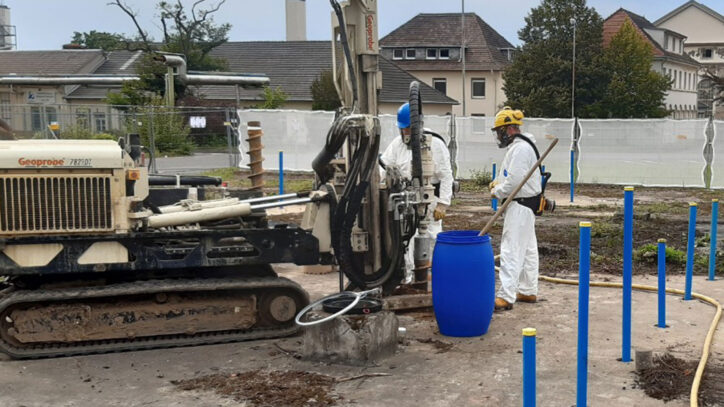
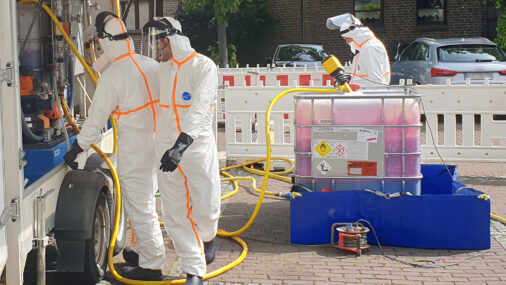
Sensatec offers physical methods for in-situ remediation, in which contaminants are extracted from soil and groundwater via air or water pathways and subsequently purified. If complete removal is not possible, physical immobilization is used as an alternative to prevent further spread of the contaminants into the environment and minimize ecological risks.
Biopolymer Washing for PFAS
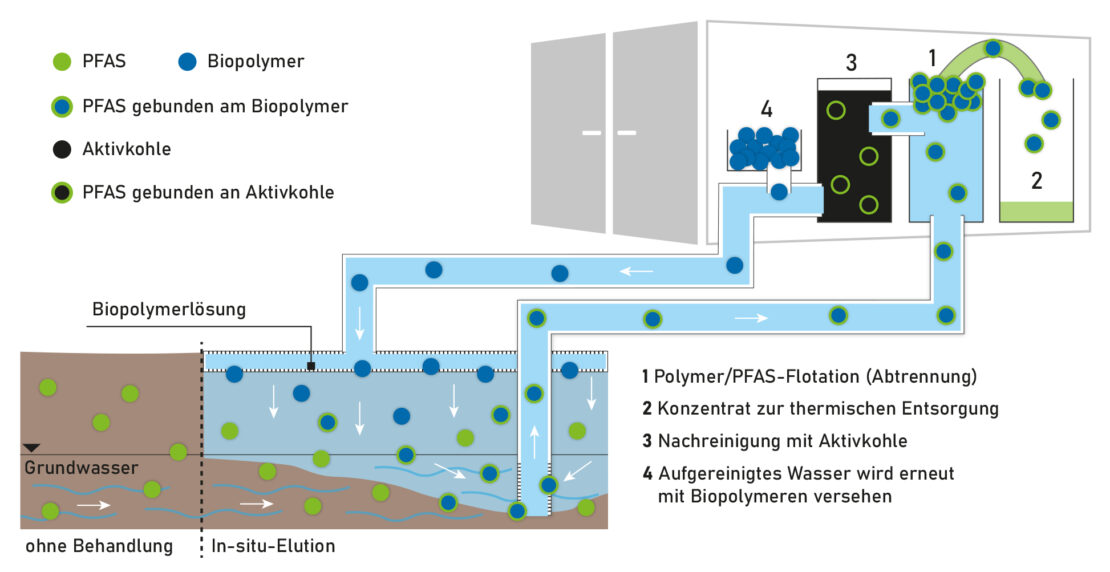
According to current scientific knowledge, PFAS are neither biodegradable nor chemically degradable. Together with our strong partners, we have developed an innovative process that can remove PFAS from the water cycle.
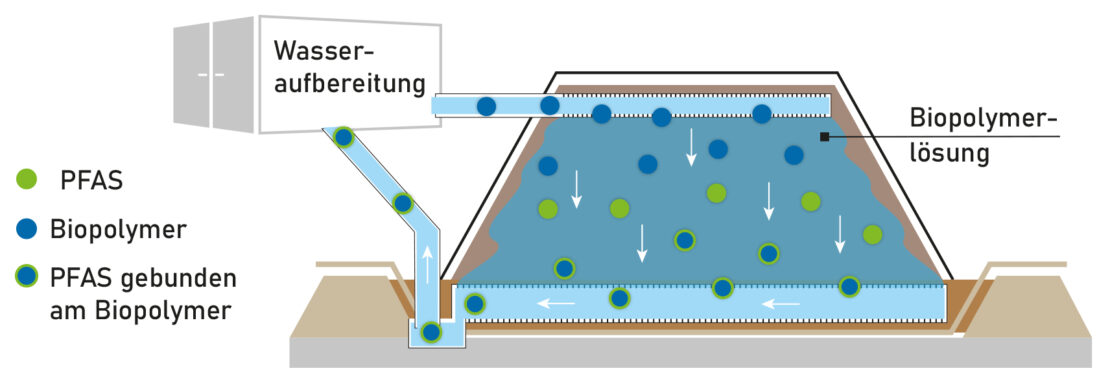
Our technical solution for PFAS remediation involves the use of biopolymers, which significantly accelerate the leaching of PFAS from contaminated soil. Through the PFAS elution process we developed, the PFAS are separated from the soil and can be captured and pumped out via the water flow. The rinse water is then treated and can be reused in a closed-loop system (flotation technology).
We can implement this technology both on-site, in the form of flushed boreholes, and in situ by spraying the soil with a biopolymer solution and pumping out the flushing water from the near-surface groundwater.
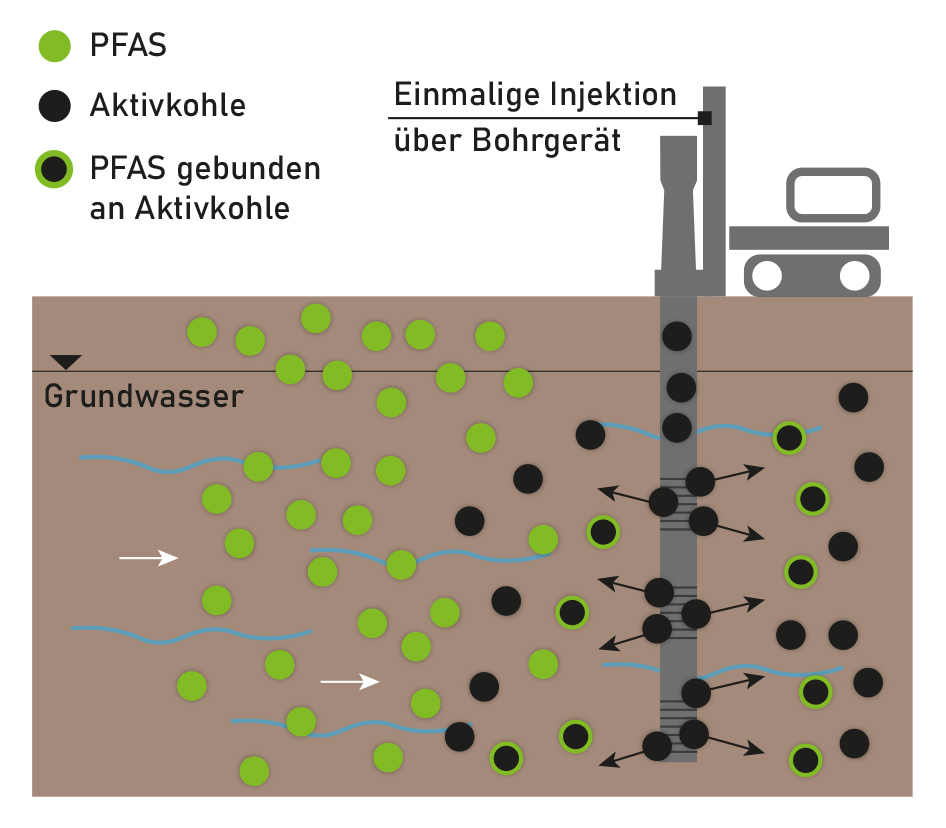
We can immobilize the poorly soluble PFAS—which are not removed by the leaching method—in the soil matrix for the very long term using activated carbon injection. As a result, both long- and short-chain PFAS no longer pose a health risk to humans or the environment.
Immobilization or stabilization procedures
Heavy metals cannot be biodegraded or chemically destroyed. Therefore, a good—and usually very cost-effective—alternative for treating soil and groundwater contaminated with heavy metals is the physical immobilization of the heavy metals through activated carbon injection.
To achieve the greatest possible coverage and application rates, the finely ground activated carbon is injected directly into contaminated soil or groundwater as a high-viscosity suspension using our specially developed TSE process.
From our range of active ingredients, we provide specialized adsorbents that are well-suited to the specific contamination scenario and can irreversibly bind heavy metals within highly adsorbent structures. We have concrete project experience in the use of brominated activated carbon for mercury removal—a technology first introduced in Europe by Sensatec. Our expertise also includes reductive reagents such as Metasorb and oxidative precipitation processes, for example, for arsenic removal.
The immobilization process using granular activated carbon can also be applied to the PFAS class of contaminants. This immobilizes the contaminants and reduces their spread in the subsurface.
Activated carbon injection is often combined with biological processes to promote the long-term degradation of pollutants. To ensure the highest possible process reliability, we therefore often combine in-situ immobilization with biopolymer-supported in-situ elution (biopolymer leaching).
Pump-and-Treat
The pumping and treatment of contaminated groundwater extracted via wells at a contaminated site is one of the oldest and most established methods in environmental remediation. When properly designed, it prevents the further spread of water-soluble contaminants.
Pump-and-treat methods have proven to be highly effective in containing groundwater contamination. In this case, the groundwater contamination does not spread further, for example, beyond the property boundaries.
However, pump-and-treat methods rarely contribute to actually resolving groundwater contamination, since usually only a fraction of the contaminants are actually present in the water in dissolved form. This typically results in these containment systems operating for years—and in some cases, even decades—without the source of contamination itself being eliminated. Nevertheless, containment measures designed solely to prevent the outflow of contaminants are entirely justified.
We therefore offer the pump-and-treat method in combination with complementary in-situ remediation measures, including biological or chemical methods.
Surfactant Mobilization
The water solubility of many organic pollutants is relatively low. In areas where large quantities of contaminants have entered the subsurface—for example, due to accidents or leaks—these contaminants exist as non-water-soluble light non-aqueous phase liquids (LNAPL) or dense non-aqueous phase liquids (DNAPL). These phases are difficult to remove via groundwater extraction and cannot be removed in situ through microbial or chemical degradation processes.
Surfactant mobilization is an effective and cost-efficient method for dissolving these phases into the aqueous phase, thereby activating them for effective remediation processes.
Thanks to years of research, Sensatec has extensive practical experience in this field. We possess detailed expertise in this area thanks to a recently completed research and development project that investigated the biological tolerance limits of surfactant use in combination with the leaching of VOCs from residual phases.
Air Sparging
The air sparging method can be used to transfer highly volatile organic compounds from groundwater into the soil air.
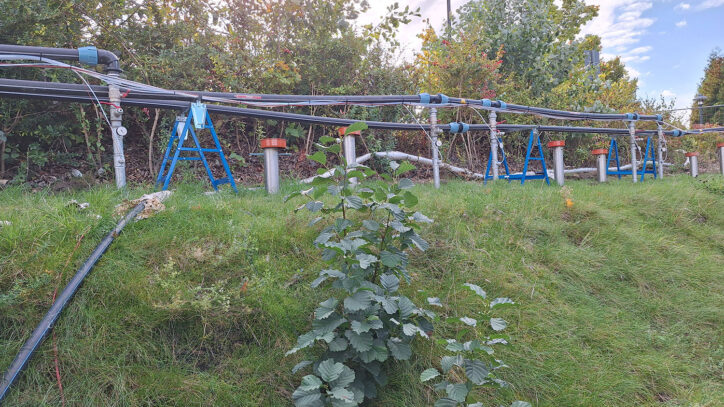
In this process, compressed air is injected into the aquifer via injection lances to displace the volatile contaminants (e.g., BTEX or MKW) from the groundwater. To prevent the contaminants transferred to the gas phase from escaping uncontrolled, soil air is simultaneously extracted to remove the mobilized contaminants.
In addition, a desirable secondary effect occurs. The introduction of air promotes the growth of aerobic microorganisms that can biologically break down the pollutants in the soil.
Floor Air Extraction
In soil air extraction, negative pressure is created in the unsaturated soil zone (above the water table). Contaminated soil air containing volatile pollutants is extracted through extraction wells. The extracted soil air is then purified above ground using activated carbon.
We provide a soil vapor extraction system that is custom-tailored to the specific remediation project. In well-permeable soil conditions, we can offer this technology as a highly effective method for remediating soil contamination—such as from BTEX or VOCs—ideally to be carried out before, for example, floor slabs for new buildings are removed.
Explosion protection criteria often require special attention in this process. We have practical experience in this area as well and can implement the necessary measures at each individual location.
In-situ Thermal Remediation Methods
In-situ thermal remediation methods are among the most effective technologies for the sustainable removal of complex contaminants from the subsurface. Through the targeted application of heat, even low-volatility or tightly bound contaminants are mobilized and can then be removed via soil vapor or groundwater.
Once a large portion of the contaminants has been successfully removed, it is often advisable to eliminate the remaining contaminants through a biological post-treatment process that utilizes the residual heat remaining in the system
Using this method, Sensatec carries out effective remediation directly in the soil—without extensive excavation, with a high degree of process control, and within a relatively short project timeline.
Hot Water Flushing
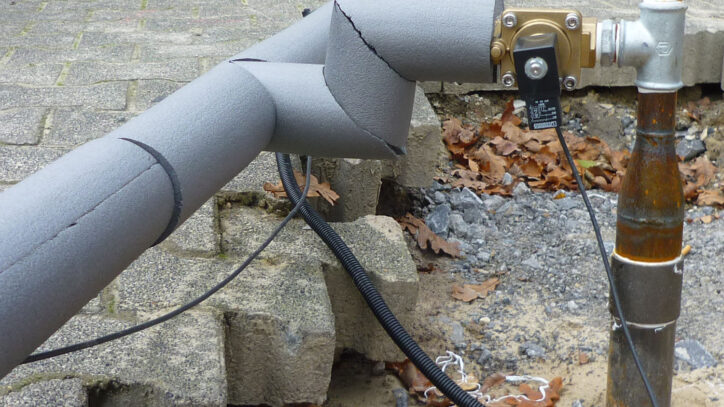
Hot Water Flushing (HWF) is a technically very simple process in which treated groundwater is typically heated to a temperature of approximately 90°C in a high-capacity instantaneous water heater and then infiltrated into the contaminated groundwater through special steel filters. This heat input causes the groundwater in the vicinity of the infiltration elements to heat up, thereby accelerating the dissolution of contaminants. The groundwater, which is loaded with high concentrations of contaminants, is collected in downstream collection wells and purified before being reheated and reinfiltered.
Hot Water Flushing in Action: View Reference Project
Fixed Heat Sources
In-situ thermal remediation methods using solid heat sources employ heating elements installed in the soil to selectively heat contaminated areas. The heat causes volatile contaminants to transition from the liquid state to the gas phase. They can then be safely captured using extraction or purification systems. The entire process is continuously monitored by temperature sensors to ensure uniform heating and safe operation.
Fixed Heat Sources in Use: View reference project
Electrical Resistance Heating (ERH)
A key method in this field is Electrical Resistance Heating (ERH). In this process, an electric current is passed directly through the subsoil via electrodes. The soil’s natural electrical resistance generates heat that is distributed evenly throughout the treated volume. The process works regardless of soil type and can penetrate even poorly permeable layers such as clay or silt.
ERH enables a highly controlled, efficient, and relatively fast remediation process.
References