

- Development of the Restructuring Approach
- Conducting a Laboratory Feasibility Study
- Planning and Implementation of the Remediation Project Using Biopolymer-Based PFAS Elution with Downstream Water Treatment
- Construction, Operation, and Maintenance of the Remediation Facility
- Data Evaluation and Analysis
An Invisible Danger Beneath the Surface: PFAS Remediation at an Airport in Northern Germany—Without Soil Replacement
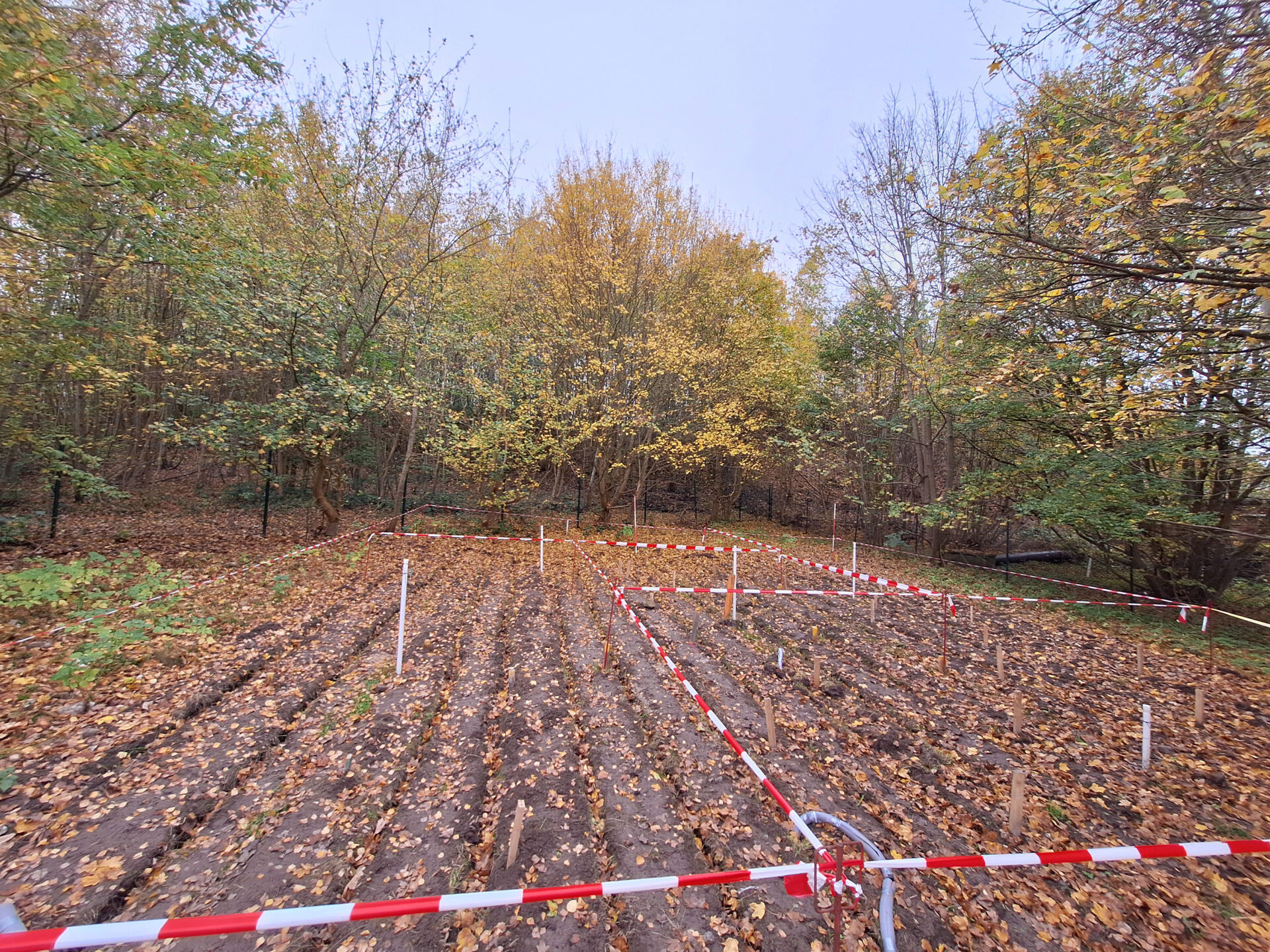
Firefighting agents save lives—but they leave their mark. At an airport in northern Germany, several firefighting operations using agents containing PFAS have contaminated the soil and groundwater. An area of approximately 200 m² has been permeated by persistent contaminants to a depth of three meters. For the planned redevelopment of the site, sustainable remediation was essential—and it had to be done without costly soil replacement.
Client
Airport in Northern Germany
Area
Approx. 200 m², up to 3 m deep
Service period
09/2024 – 06/2025
Volume extracted and treated
approx. 15,000 m³
Contract value
200,000 €
Contaminants
Per- and polyfluorinated alkyl substances (PFAS), Perfluorinated carboxylic and sulfonic acids, primarily PFNA/PFOS
Questions about the project
Key Services
Customer Benefits
- >80% removal of perfluorinated carboxylic and sulfonic acids from the unsaturated zone
- PFAS compounds have been nearly completely removed from the mobile phase
- Significant cost savings due to the elimination of excavation and soil removal
An airport, a contaminated site—and a tight schedule
Fire drills can save lives in an emergency. But the PFAS-containing fire suppressants used in them come at a price: perfluorinated carboxylic and sulfonic acids—including, above all, PFNA and PFOS —are among the most persistent environmental pollutants of all. They do not break down in the environment, accumulate in the soil, and seep into the groundwater.
When the site was slated for redevelopment, one thing was clear: there could be no fresh start without remediation. The task was challenging—the sustainable removal of PFAS from the topsoil and near-surface groundwater, ideally without extensive soil excavation.
The Challenge: PFAS Are Different
PFAS contamination poses unique challenges for remediation specialists. Conventional methods quickly reach their limits in this context:
- Excavated soil results in high costs for the removal and disposal of contaminated material
- Conventional pump-and-treat approaches do not reach PFAS in the unsaturated zone
- Immobilization with activated carbon binds pollutants but does not remove them permanently
What was needed was a method that would actively remove PFAS from the soil—one that was efficient, comprehensive, and did not involve major alterations to the site’s structure.
The Solution: Biopolymer Flushing Without Surface Intervention
The answer came from our own development lab. Together with our partner Geologik, we developed the biopolymer flushing method as part of the BioKon research project. This proved to be the most suitable method for this site—and was implemented on a large scale.
The principle is as effective as it is elegant:
- The biopolymer solution is applied to the contaminated soil area
- The solution selectively elutes the PFAS compounds from the unsaturated soil zone
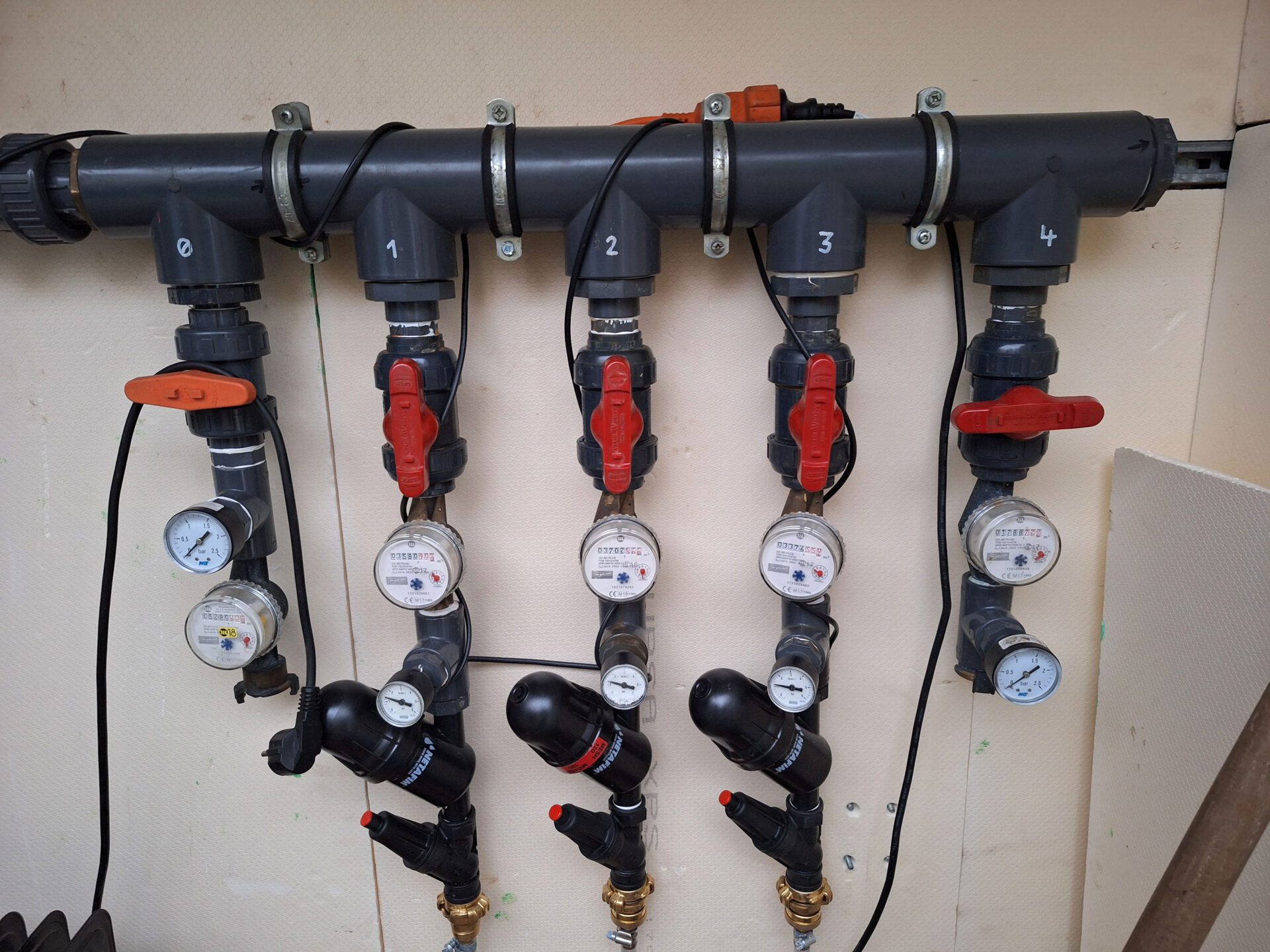
- The production water contaminated with PFAS is collected and sent to a downstream water treatment plant
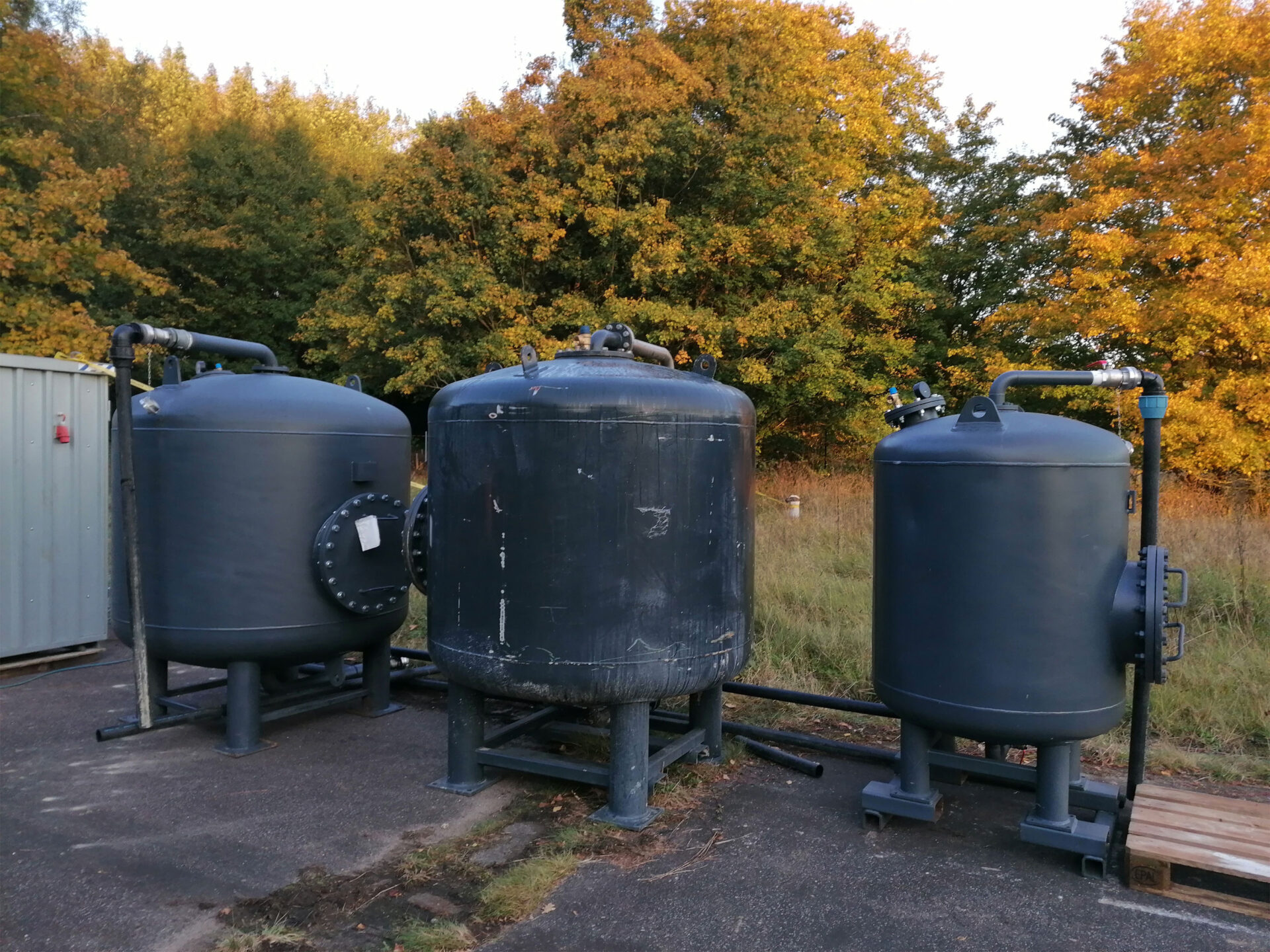
- The facility was built, operated, and maintained by Sensatec itself
Before the measure was rolled out on a large scale, a laboratory feasibility study confirmed the effectiveness of the approach. From the development of the remediation concept to the final data analysis, the entire project was managed by a single team.
Implementation: Ten months, one site, one clear result
The remediation was carried out from September 2024 to January 2025. During this period, approximately 15,000 m³ of water was extracted and treated—from a contaminated area of about 200 m² to a depth of 3 meters.
The results upon completion of the initiative:
- > 80% removal of perfluorinated carboxylic and sulfonic acids from the unsaturated zone
- PFAS Compounds in Water Have Been Almost Completely Removed
- No excavation, no hauling—significant cost savings compared to traditional methods
Conclusion: Even better than expected
The process exceeded initial expectations. The purification performance was so high that the subsequent in-situ activated carbon immobilization—which had been planned initially—could be omitted from further planning, resulting in additional time and cost savings for the client.
This project demonstrates that even highly persistent contaminants such as PFAS can be effectively and cost-effectively remediated—provided the right method is used. The biopolymer flushing method we have developed thus sets a new standard in PFAS remediation and demonstrates that innovative in-situ methods are superior to traditional excavation solutions not only environmentally but also economically.