
- Contaminants in hard-to-reach geological structures
- Extremely high costs for soil excavation
- Geological barrier structures should be preserved
- Complex dispersion patterns of pollutants
- Groundwater in deeper layers: a sensitive resource
In-situ contaminant remediation in geologically challenging and complex subsurface conditions
In difficult subsurface conditions such as bedrock, clay, loam, or heavily stratified marl formations, contaminant remediation poses a major challenge for many sites.
In these geological formations, contaminants are often distributed in areas that cannot be penetrated hydraulically or pneumatically, or can only be penetrated extremely slowly. Conventional in-situ remediation methods quickly reach their limits here because the required active ingredients and reagents cannot be distributed efficiently enough in the subsurface. As a result, there is insufficient contact between the contaminant and the active agent. Conventional soil replacement methods also reach their limits of feasibility here because contaminated rock cannot be removed economically, and contaminated clay or loam soils should not be removed due to their continued function as a barrier against contaminants for deeper aquifers.
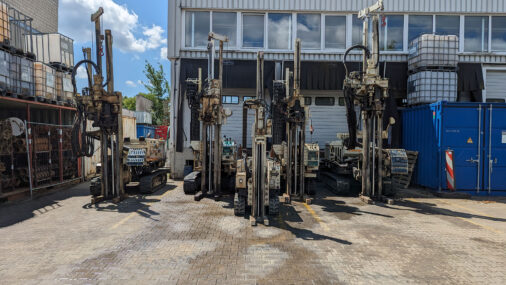
To overcome these geological obstacles, Sensatec has developed a process that addresses this very issue: With our TSE® process, we are able to precisely place biological or chemical active ingredients underground exactly where natural geological barrier structures prevent effective distribution.
By combining minimally invasive technology, geological expertise, and high-quality workmanship, we help ensure the long-term stability of sites even under complex conditions, enhance their functionality, and prepare them for future demands.
Challenges
Our Approach
- Understanding Damage Patterns and Pathways
- Develop a site-specific remediation strategy
- Demonstrate feasibility in the laboratory and on site
- Implementing Large-Scale Technical Measures
- Monitor and Verify Effectiveness
Project Example
Background
At the site of a former weaving and dyeing mill in North Rhine-Westphalia, groundwater contamination with VOCs has been contained and remediated since 2003 using a pump-and-treat approach.
Although groundwater extraction had led to a significant reduction in contaminant levels in the early years, after a few years of operation, a stable—but still significantly too high— concentration of LCKWs was detected in the groundwater. In this process, LCKW leached out of the highly contaminated silt and marl layers beneath the aquifer, resulting in a continuous release of contaminants into the aquifer itself.
Due to the continued leaching of LCKWs from these storage structures, LCKW concentrations in the groundwater remained high, preventing the hydraulic remediation and containment measures from being discontinued.
Challenge
The municipality was determined to reduce the high operating costs of the pump-and-treat facility as quickly as possible—or eliminate them entirely. Completely excavating the remaining areas contaminated with LCKW to a depth of approximately 12 to 15 meters below the entirely redeveloped site was simply out of the question.
Solution
In consultation with the municipality and the Environmental Protection Agency, it was decided to carry out a source remediation of the marl and silt formations containing volatile organic compounds (VOCs) located below the first aquifer.
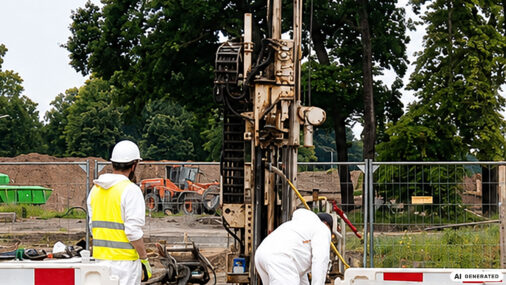
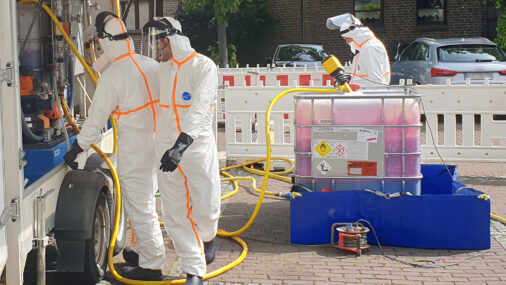
Due to the challenging subsurface conditions, we employed our specialized solids injection method (TSE® – targeted solids emplacement) at the site. Using this method, oxidizing agents were precisely placed layer by layer directly into the silt and marl structures containing volatile organic compounds (VOCs) , penetrating deep into the subsurface. To better reach and treat water-insoluble contaminants, a surfactant solution was used in addition to the oxidizing agents.
Result
As a result, the in-situ remediation measure—which specifically took into account the potential for additional LCCW migration into the confining formations—led to a significant, lasting reduction in LCCW concentrations in the affected groundwater. This made it possible to significantly reduce the cost of the hydraulic containment measures at the site.
Details of the successful in-situ remediation: View reference project

Let’s assess the complexity of your site
Even when dealing with challenging subsurface conditions, there is a promising remediation solution for your site. Drawing on our many years of experience and our wide range of available techniques, we will develop the right strategy for your specific needs.