

- Targeted placement of a potassium permanganate solid suspension into specific horizons of the contaminated silt and clay marl
- Input efficiency> reached 99% in 6 injection boreholes (1,200 kg of active ingredient)
- Pre-injection with biodegradable surfactants to improve the oxidation of pollutants
- Long-term effects of potassium permanganate as a “remediation source” in the contaminated area
- Targeted injection of active ingredients from EHC followed by bioaugmentation in contaminated soil areas
When Pump-and-Treat Isn’t Enough: LCKW Spring Remediation at an Industrial Brownfield Site in Gronau
Some contaminated sites cannot simply be pumped clean. At the site of a former weaving and dyeing mill in Gronau, North Rhine-Westphalia, volatile chlorinated hydrocarbons (VCHCs) have been contaminating the groundwater for decades. A “pump-and-treat” measure, which has been in place since 2003, was able to prevent the groundwater contamination from spreading further, but could not permanently eliminate it—because deeper, similarly contaminated layers of silt and marl kept releasing the contaminant. To tackle the source of the contamination directly, a targeted in-situ source remediation was therefore initiated, which also included the contaminated silt and marl layers.
Client
City of Gronau
Area
Approx. 200 m²
Service period
2012: Laboratory feasibility study, 2016: Pilot test (push-pull test), 2021: Full-scale TSE with ISCO, 2022: EHC injection followed by bioaugmentation
Contract value
130,000 €
Method
In-situ chemical reduction (ISCR) and anaerobic biological degradation (“Enhanced Natural Attenuation,” ENA)
Active agents
1,200 kg of potassium permanganate, 100 l of surfactants, 1,825 kg of EHC, 50 l of augmentation culture
Contaminants
Highly volatile chlorinated hydrocarbons (LCKW)
Questions about the project
Key Services
Customer Benefits
- In-situ remediation with minimal disruption to the public space in the downtown area
- Sustainable Restoration of the Spring
- No operational restrictions during project work in public areas
- No excavation required
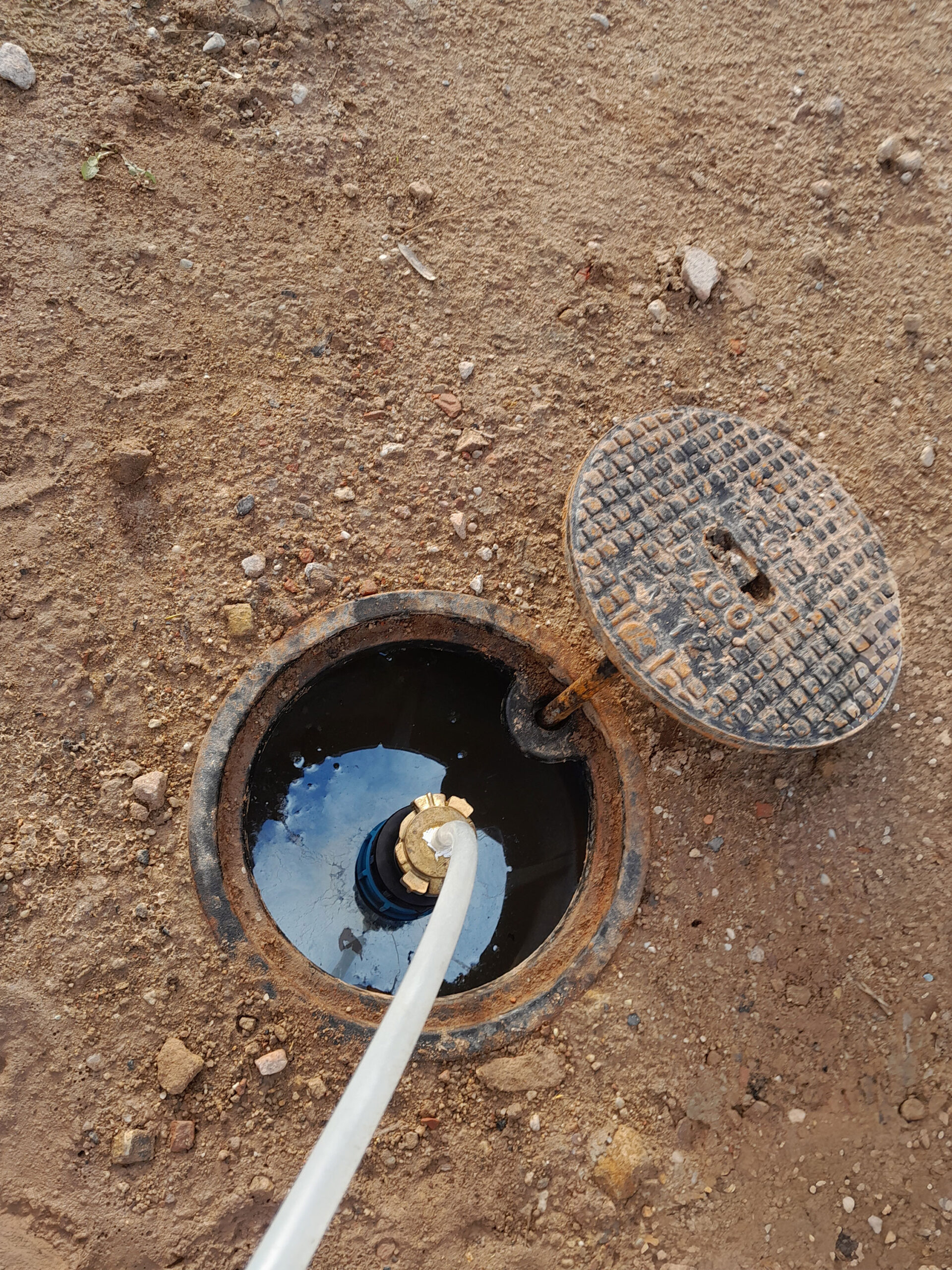
From Pollution Source to Sustainable Remediation: VOC Remediation with ISCO and ENA
Contaminated groundwater is not an abstract environmental problem—it is a real threat to drinking water reservoirs, ecosystems, and local residents. At the site contaminated with chlorinated hydrocarbons (CHCs), a multi-stage in-situ remediation plan was developed and implemented that combines immediate effects with long-term restoration.
Phase 1: Targeted oxidation at the source of the pollutant (ISCO, 2021)
The first step was crucial: The source of the pollutants had to be addressed directly and precisely—not somewhere downstream, but right where the concentration was highest.
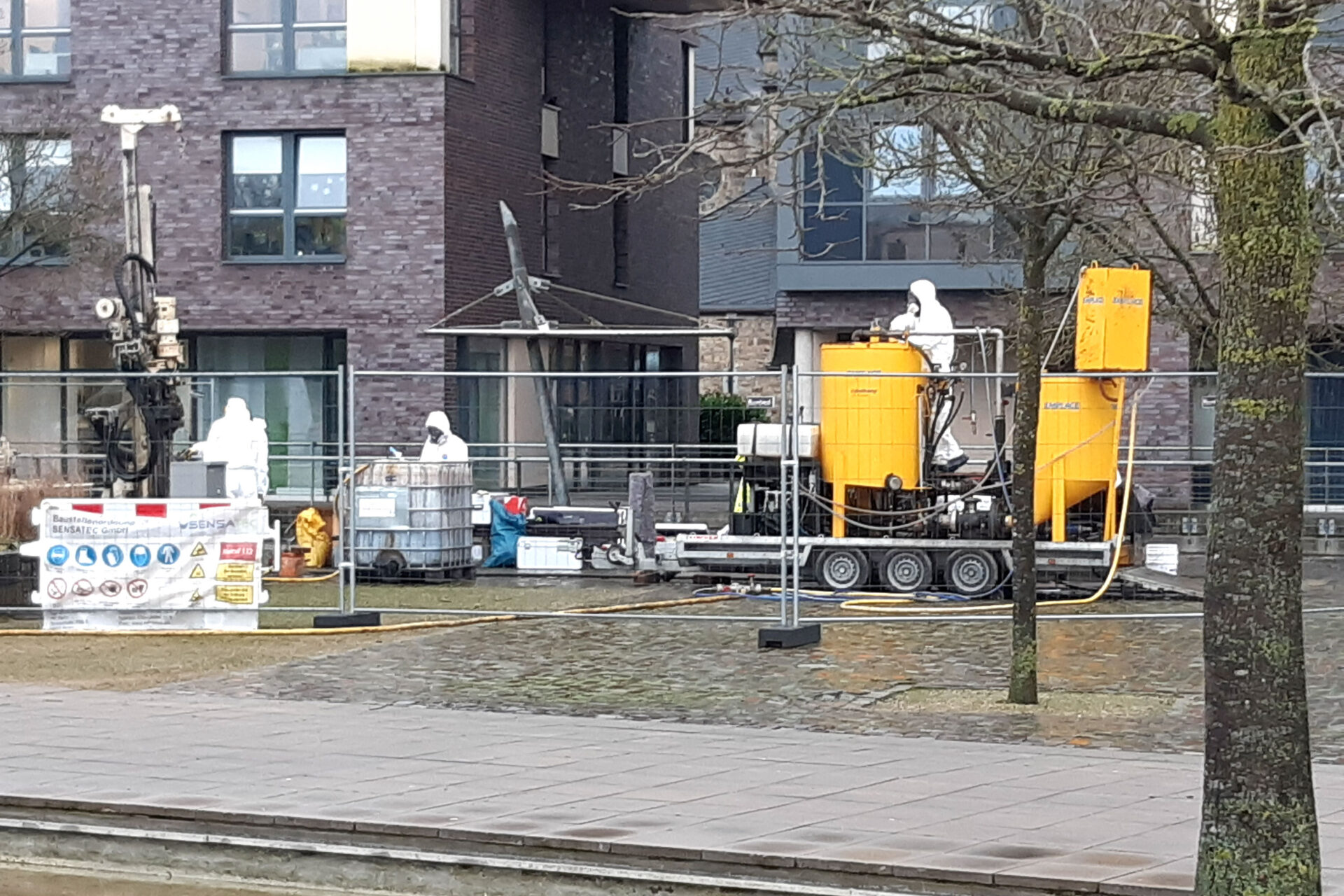
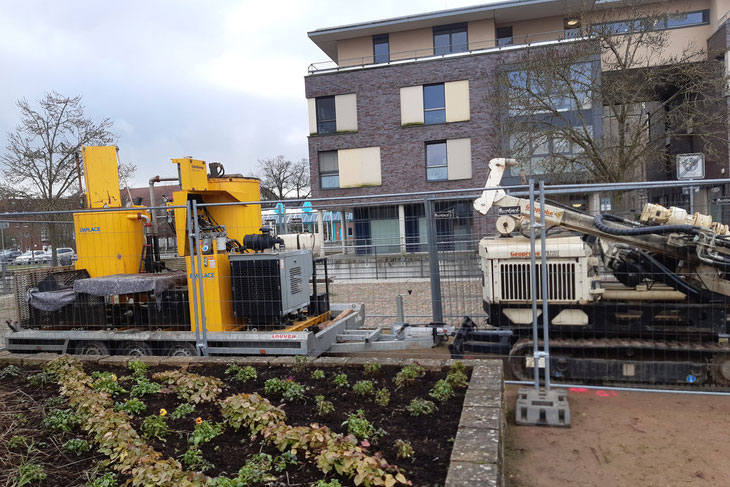
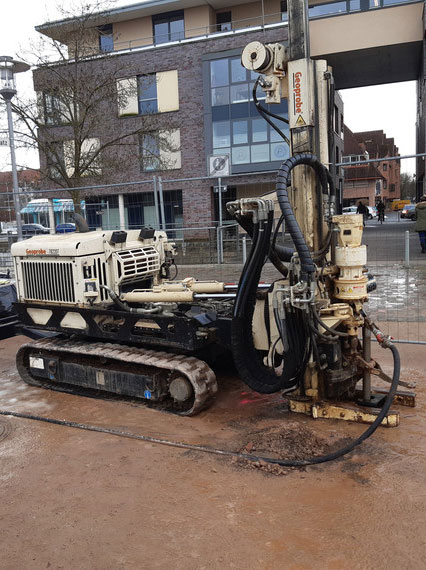
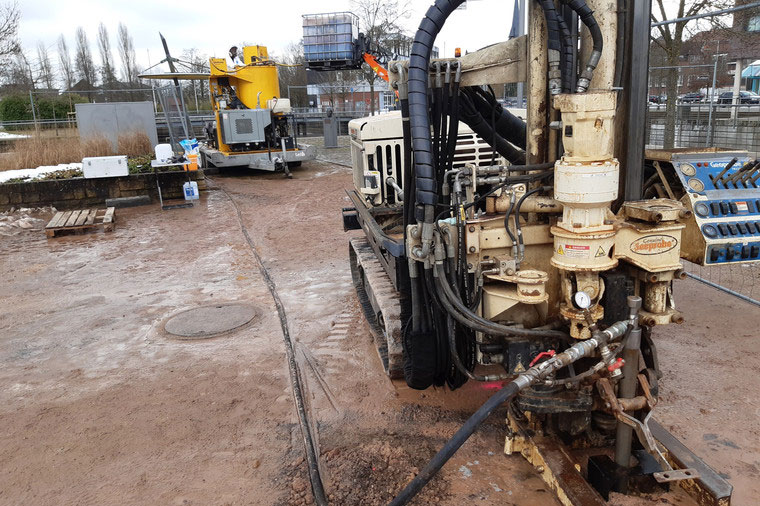
For this purpose, in-situ chemical oxidation (ISCO) using potassium permanganate was employed. Using the TSE high-pressure method for solid injection, the oxidizing agent was injected layer by layer and precisely into the contaminated subsurface zones. This process enables spatially precise distribution of the active agent in areas where conventional injection methods fail.
To maximize reactivity, a surfactant solution was injected in parallel. This improved the dissolution of the volatile organic compounds and increased the contact area between the contaminant and the oxidizing agent—a crucial factor for degradation efficiency.
Scope of Work at a Glance:
- 24 injection points
- 200 kg of potassium permanganate
- 100 L of surfactant solution
- Effective radius: approx. 4.5 m per injection point
The result: a measurable and significant reduction in VOC concentrations at the source—laying the groundwork for follow-up measures.
Phase 2: Long-Term Strategy – ISCR and Biodegradation
Chemical oxidation alone is rarely enough. Residual contamination in the subsoil is persistent, widespread, and difficult to reach. This is where the second story begins: that of slow but sustainable change.
In 2022, a combined approach consisting of in-situ chemical reduction (ISCR) and anaerobic biological degradation—collectively referred to as Enhanced Natural Attenuation (ENA)—was implemented. The active ingredient used was the Evonik product EHC® Reagent, a suspension of microiron and organic carbon that combines both chemical reduction power and a microbial food source.
To accelerate complete reductive dechlorination, a specialized microbial augmentation culture was also introduced. These microorganisms are capable of gradually breaking down VOCs into harmless end products—a process that nature alone cannot carry out at every VOC-contaminated site.
Given the long-lasting effects of the substrates and microorganisms used, the ENA processes are expected to continue for several years—an investment in the site’s future.
Conclusion: Integrated Renovation as a Model for Success
This project demonstrates that successful sustainable remediation is possible even under difficult geological conditions. Deep-seated layers of silt and marl, which act as persistent reservoirs of contaminants, pose a particular challenge—they elude conventional hydraulic remediation methods and make direct access to the source of contamination considerably more difficult.
This is precisely where the combined in-situ strategy of ISCO, ISCR, and ENA has proven its strengths. The combination of targeted immediate measures and biologically supported long-term effects has yielded measurable results even in this challenging subsoil—making this approach a modern standard in contaminated site remediation.