

- In-situ physical cleaning process
- Material Handling
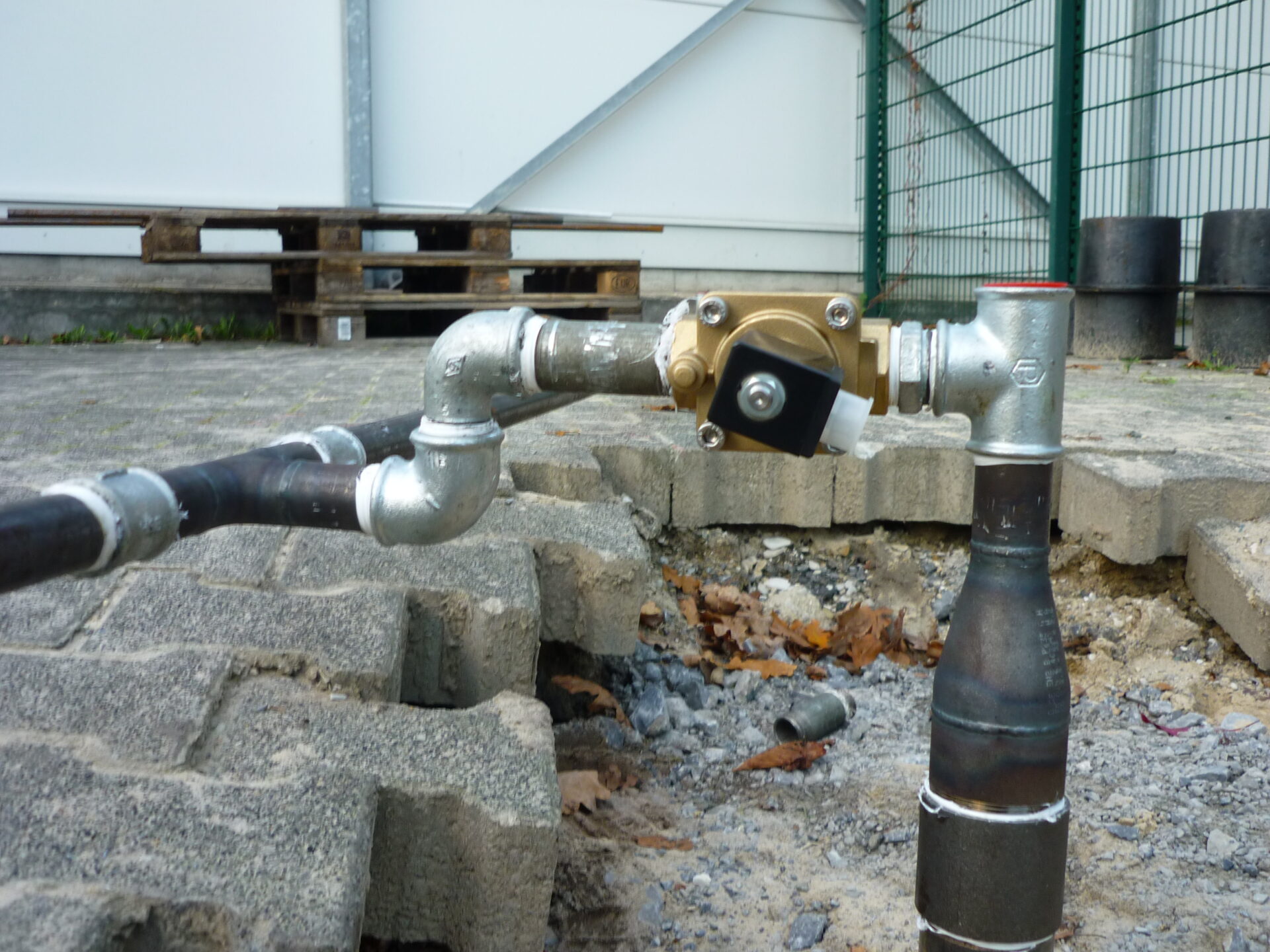
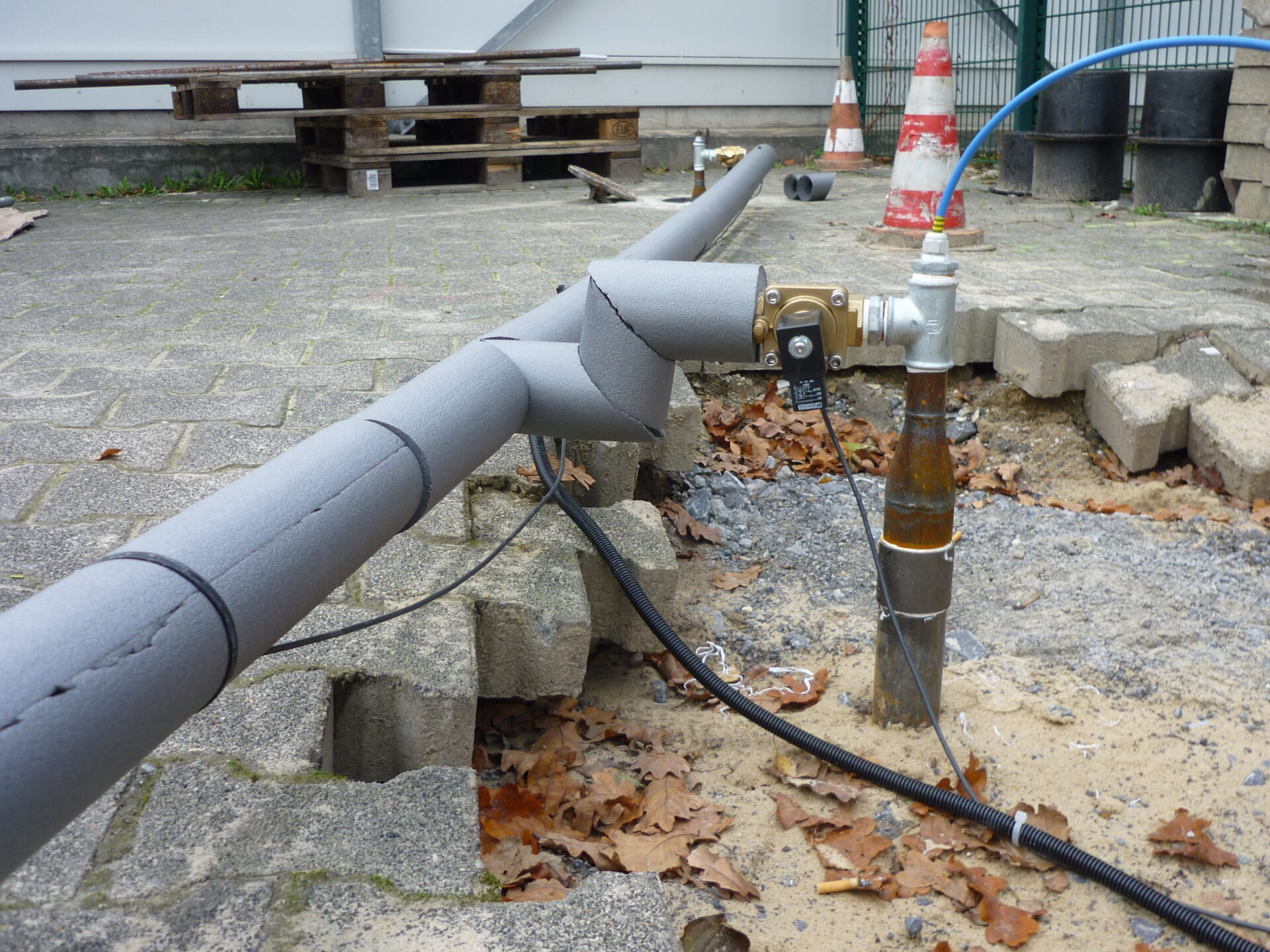
- Installation of special stainless-steel gauges for hot water infiltration
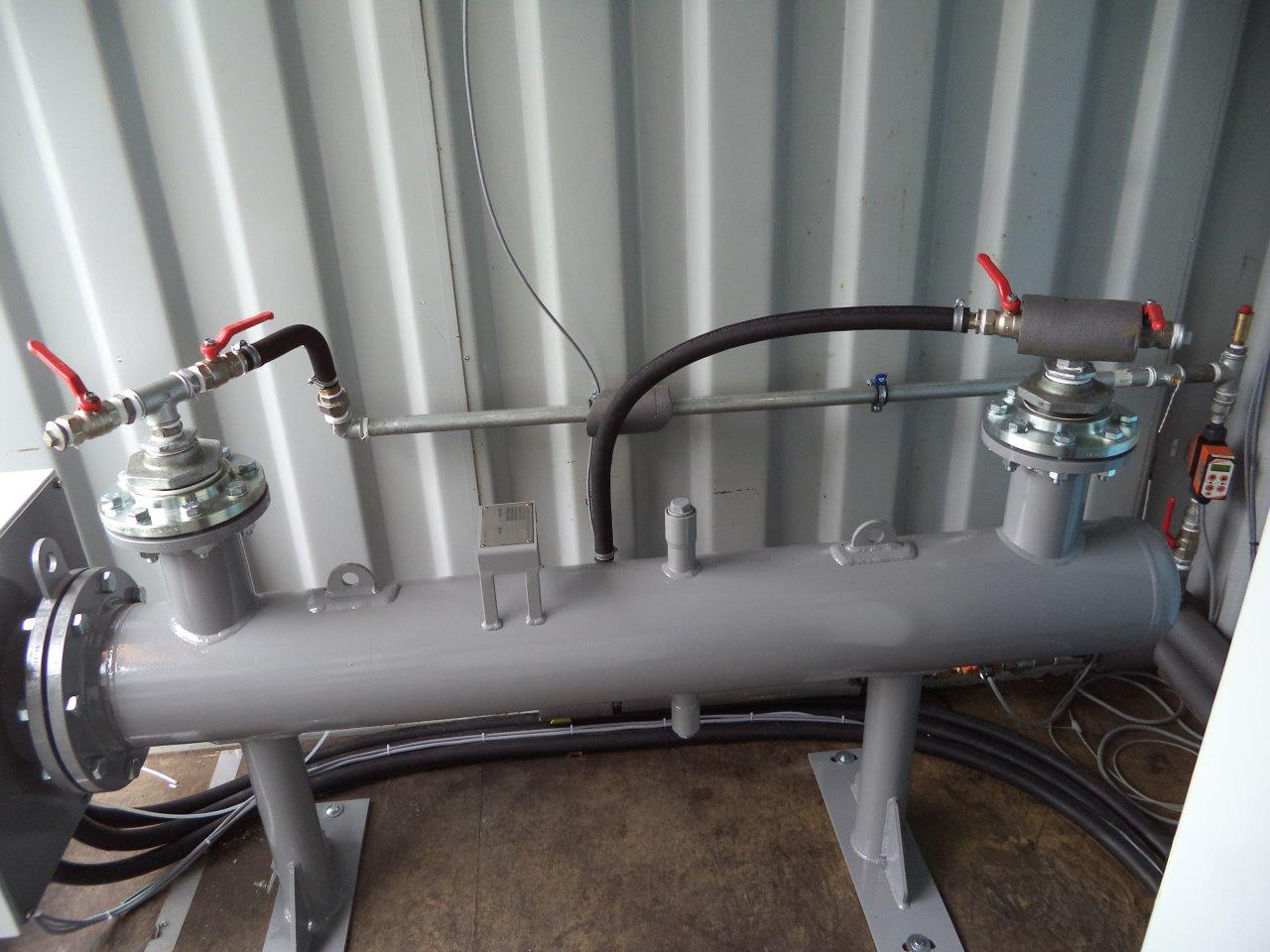
- Installation and operation of a 150-kW instantaneous water heater system, including controls
- In-situ temperature sensor network for monitoring the heat front in situ
- Operation of an online gas chromatograph for pollutant removal
When ISCO and biological methods aren’t enough: Thermal LCKW remediation using hot-water flushing at a former large-scale laundry facility
Not every contamination incident can be resolved with a single method—sometimes it requires a combination of experience, analysis, and the right follow-up procedure. At a former large-scale laundry facility, several hundred liters of volatile organic compounds (VOCs) —primarily PCE—seeped into the ground following an accident. Neither chemical oxidation using ISCO nor biological in-situ remediation was able to effectively eliminate the contamination. The solution ultimately came from thermal remediation: the hot-water flushing method —physical, efficient, and without the use of surfactants.
Client
Construction and Real Estate Management NRW
Area
Approx. 400 m²
Contract value
460,000 €
Method
Contaminants
Highly volatile chlorinated hydrocarbons (LCKW), Highly volatile, toxic chlorinated hydrocarbon (PCE)
Questions about the project
Key Services
Customer Benefits
- Mobilization of Contaminants Without the Use of Chemical Reagents
- High efficiency in the physical removal of pollutants
One mishap, two failed attempts—and a new idea
The extent of the contamination was significant: Hundreds of liters of PCE had spread underground and settled as a contaminant phase in “puddles” on a groundwater pool—difficult to access, persistent, and resistant to the methods used to date.
The difficult accessibility of the LCKW and the “pooling” of the substance in the transition zone to the basin silt ultimately also complicated the prior application of in-situ alternatives such as ISCO and biodegradation. Both approaches were tested at the site—with unsatisfactory results. The consulting firm subsequently recommended a different approach: hot-water flushing —the targeted thermal mobilization of the contaminant phase using hot water, combined with the targeted collection of the mobilized contaminants via a hydraulic containment measure.
The Solution: Heat Instead of Chemicals
The principle of hot-water flushing is as effective as it is elegant. Groundwater that has been pre-treated is heated to approximately 90 °C and flushed specifically through the contaminated zone. The heat dissolves the VOC phases present on the groundwater barrier and mobilizes them—without the use of surfactants or other chemicals.
The mobilized mixture of contaminants and water is then hydraulically captured, pumped out, and treated. The process physically cleans the subsoil, achieving significantly higher VOC removal rates than decades of pumping without temperature elevation.
Pilot Phase: Test First, Then Expand
Prior to large-scale implementation, a targeted pilot test was conducted in a limited area of the contaminated site. The VOC removal rates achieved during this test impressively confirmed the effectiveness of the process. Based on these results, the decision was made to expand the project to the entire site—a decision that was well supported by the pilot data.
Technical Implementation: Precision at 90 Degrees
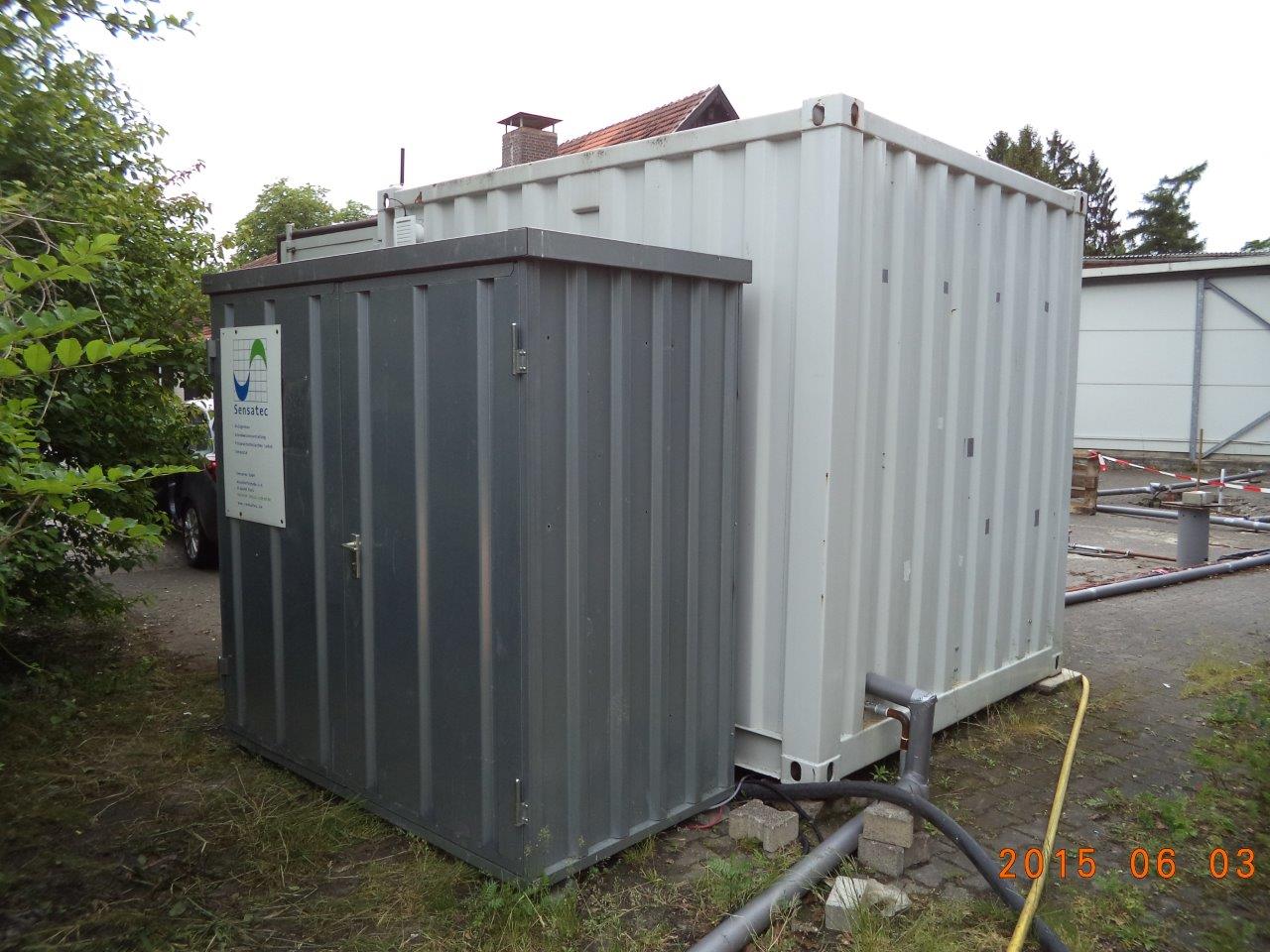
The centerpiece of the system was a 150-kW electric-controlled instantaneous water heater, which was installed on site and operated throughout the entire service period.
An overview of the technical features:
- 150-kW instantaneous water heater system, including electrical controls
- In-situ temperature sensors for continuous monitoring of heat propagation in the subsurface
- Mobile GC system integrated into the flow stream for real-time analysis of pollutant discharge rates
- Pump and Measurement Technology for Process Control
The combination of thermal treatment, temperature monitoring, and real-time analytical control enabled precise management of the entire remediation process—over the course of the project from 2014 to 2021.
Conclusion: High-performance cleaning of LCKW in the subsoil can also be achieved using hot water.
This project demonstrates that contaminant phases in the boundary zone between the aquifer and the groundwater storage zone are not accessible to either chemical or biological methods, but are accessible to a thermal method. Hot-water flushing has proven effective there—without the use of chemicals, with high removal rates, and with long-lasting results. A solution that requires patience, precision, and the right method—hot-water flushing delivered exactly that.