

- Detailed Design for the PRB
- Preparing the Water Rights Application
- Technical Implementation of an EHC-Based PRB
- Maintaining the PRB through injections using Sensamulsion
- Cultivation and Infiltration of Sensabac-DHC
- Analysis of Biodegradation Processes
- Additional measures to investigate the source of the damage
When the Subsoil Becomes a Treatment Plant: Invisible VOC Remediation Beneath the City
Dry cleaning often leaves invisible traces—deep in the groundwater and far downstream. At a former dry-cleaning site, VOC contaminationhas polluted the groundwater. The particular challenge: The site is covered by a large building complex in the middle of the city—making conventional soil excavation impossible from the outset. Instead of addressing the contamination on a case-by-case basis, a permeable reactive barrier (PRB) was installed across the flow direction. This created an invisible remediation system directly underground, without interfering with the existing buildings.
Client
Real Estate Industry
Area
Approx. 1,000 m²
Service period
since 04/2022
Volume extracted and treated
approx. 100,000 m³
Contract value
500,000 €
Method
Construction of a Permeable Reactive Barrier (PRB) in the Subsoil
Active agents
EHC (Evonik), allicin-containing methanogenesis inhibitor, Sensamulsion, Sensabac-DHC
Contaminants
Highly volatile chlorinated hydrocarbons (LCKW)
Questions about the project
Key Services
Customer Benefits
- Full use of the site without restriction
- Building rights have been obtained for the development downstream
- “Invisible” renovation without disrupting residents
- Significant cost savings compared to building demolition and soil excavation
- Significant cost savings compared to long-term pump-and-treat
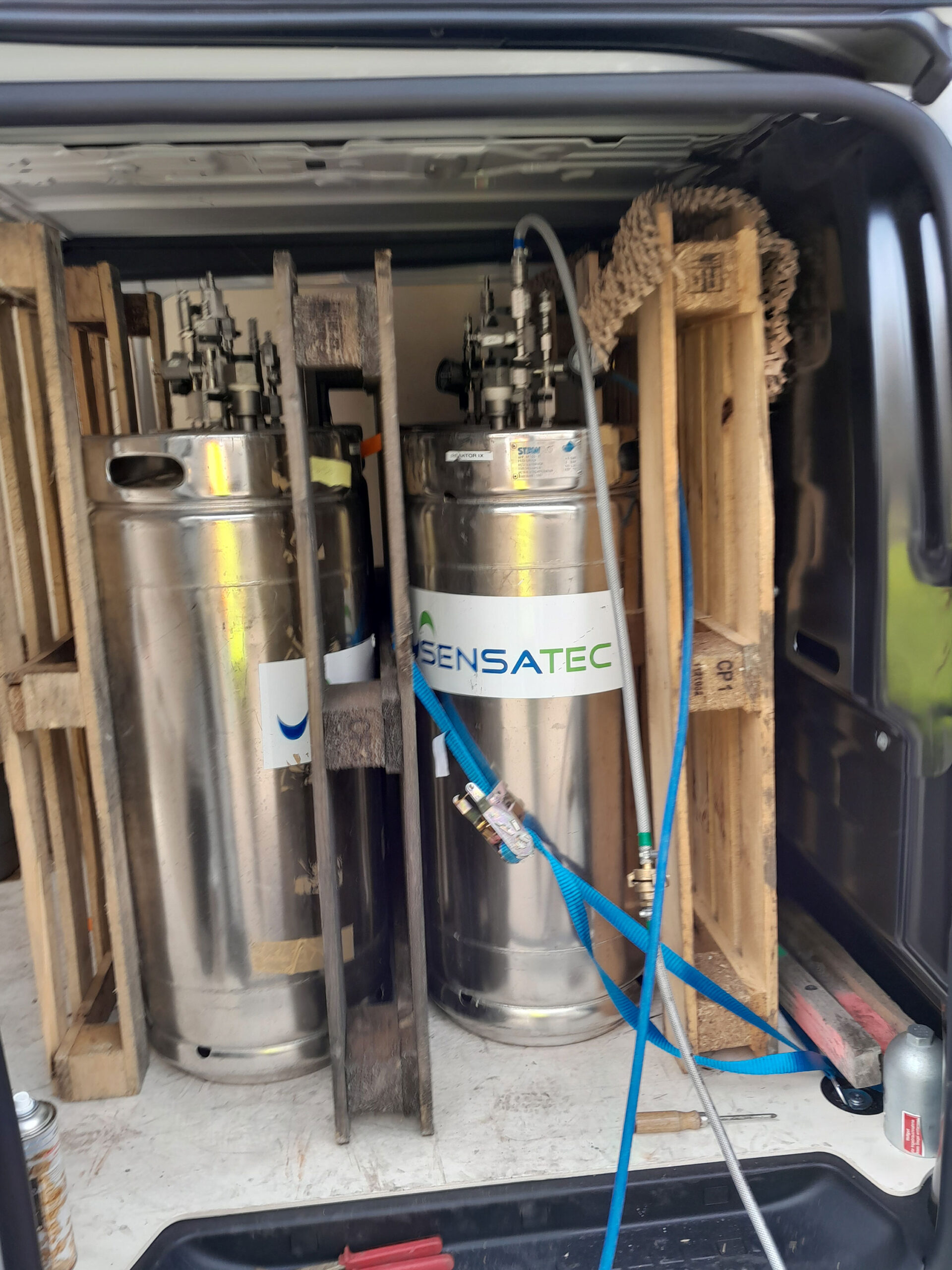
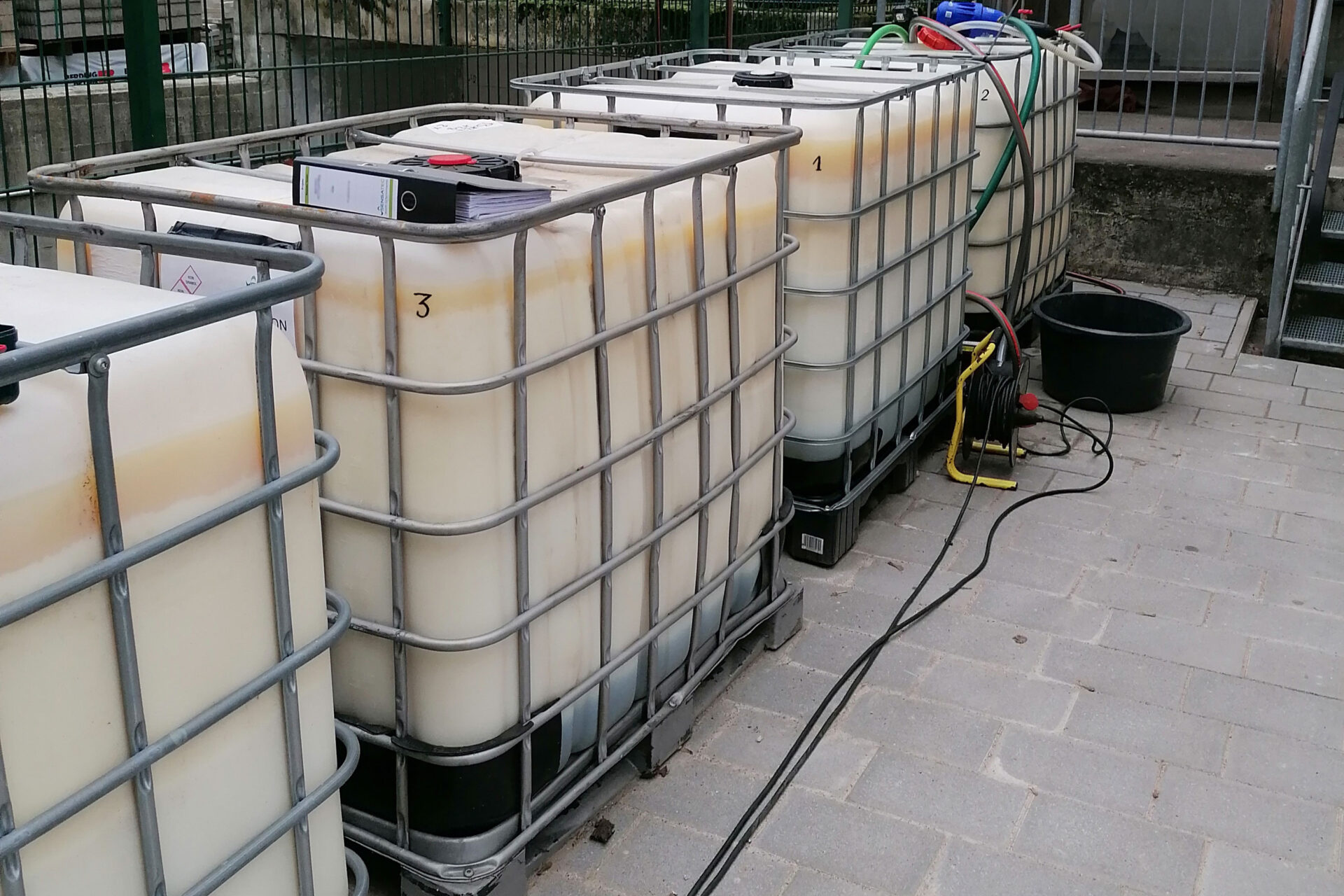
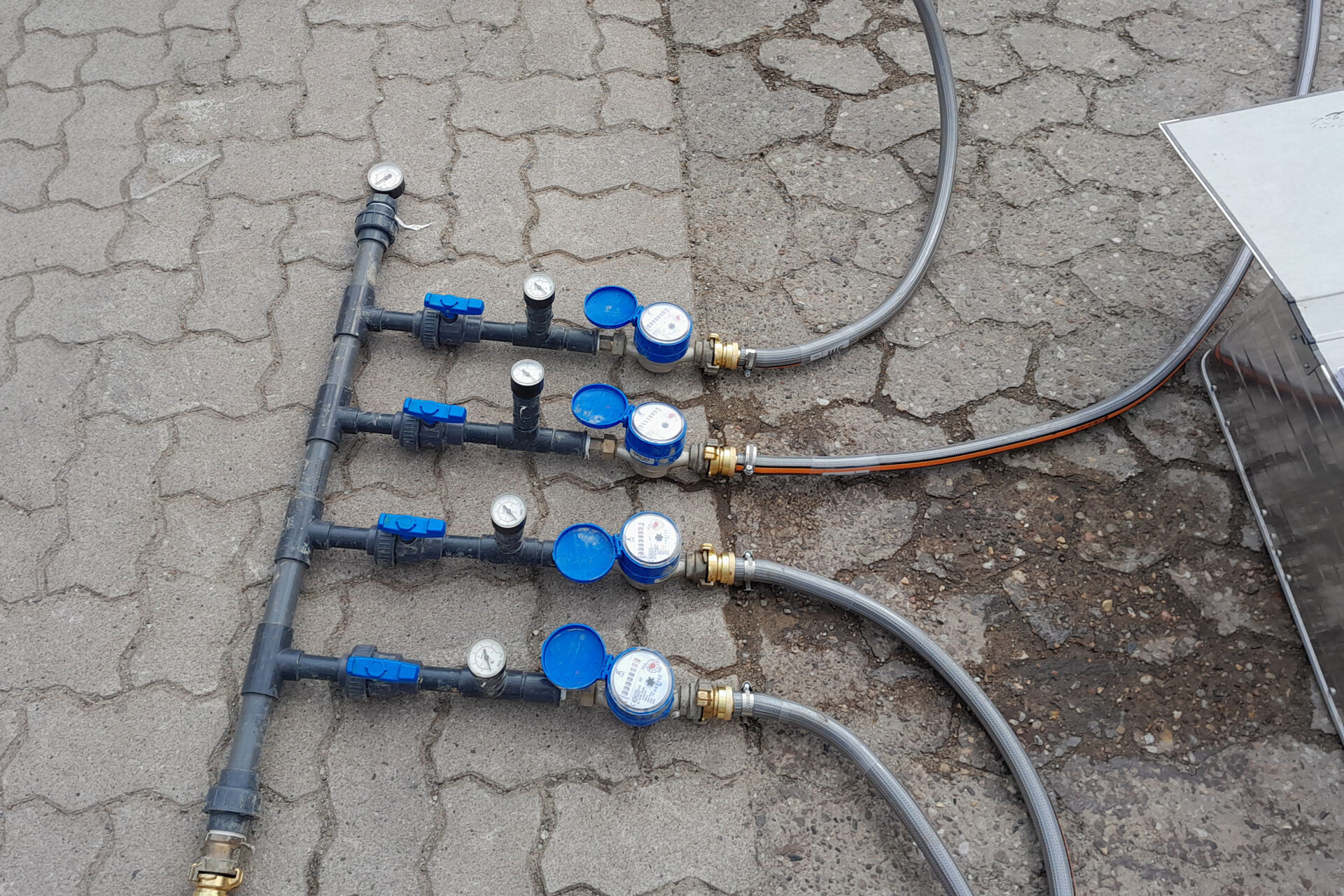
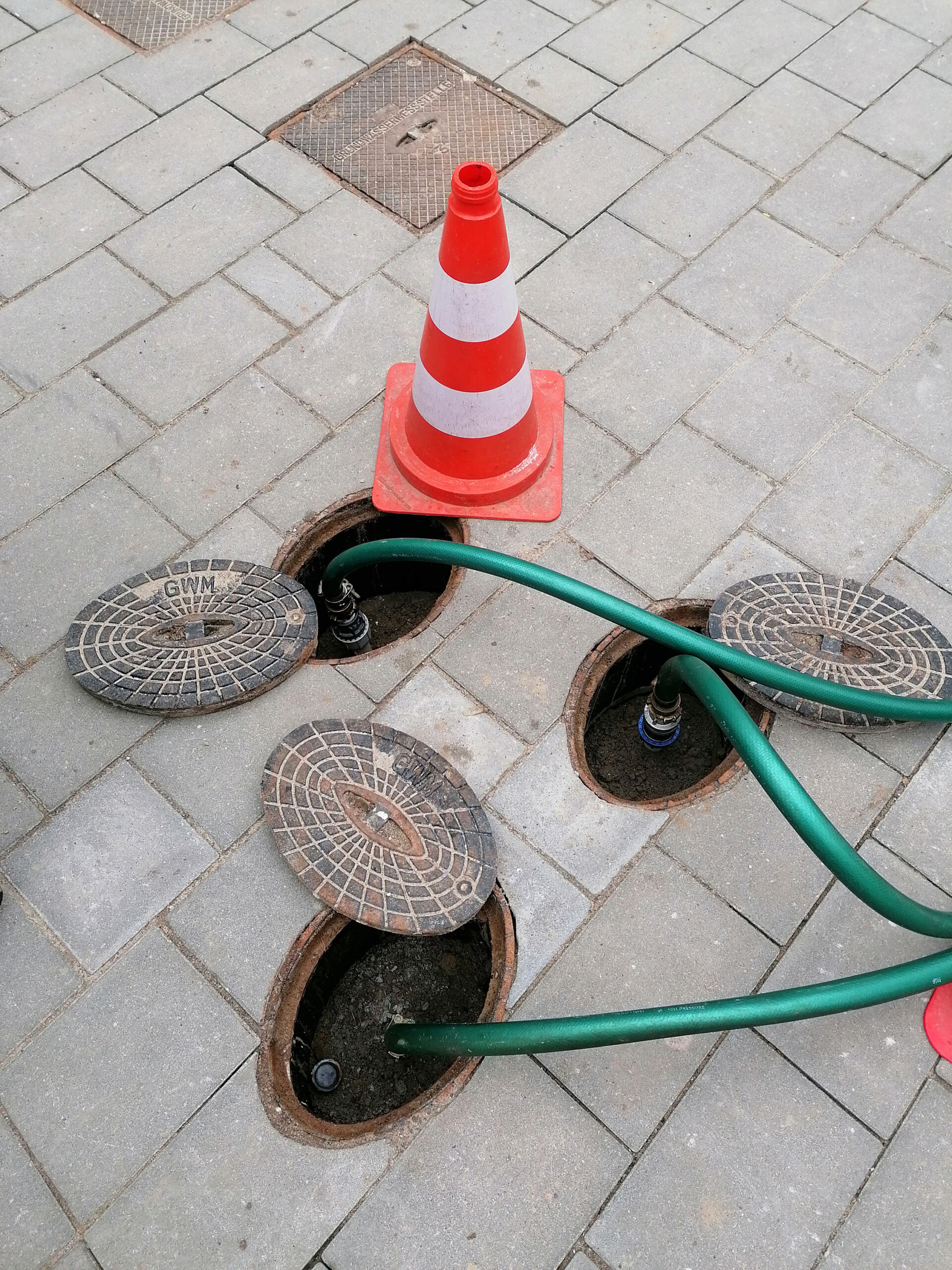
Remediation Without Interrupting Operations: Removal of Heavy Motor Vehicles Without Excavation
The source of contamination is located in the northeastern part of the property. VOCs are continuously transported further by the groundwater flow, which is directed toward the southwest. The development of the site significantly restricted access to the subsurface and limited the options for injection points. Conventional remediation approaches, such as soil excavation or near-surface interventions, were therefore ruled out. A method was needed that would act deep underground—without affecting the existing structures and without interrupting ongoing operations.
The Starting Point: Limited Access, Complex Environmental Conditions
In densely built-up areas, the options for process control are limited. This makes it all the more important to precisely set the right conditions from the very beginning. The source of contamination was located beneath a building—but the outflow was secured in the adjacent courtyard. Biological HCFC remediation is effective only if the right environmental conditions prevail in the subsoil. The colonization of Dehalococcoides bacteria is crucial. These are the only microorganisms capable of completely dechlorinating VOCs. They require a pH between 6 and 8.3, as well as sulfate-reducing conditions in the aquifer.
The microbial degradation of the added substrates produces organic acids and CO₂. These can lower the pH and limit the bacteria’s effectiveness. The active ingredient EHC is formulated to actively counteract this effect and maintain stable environmental conditions—even in situations where readjustment would be possible only with considerable effort.
The Solution: Permeable Reactive Barrier with EHC and Bioaugmentation
The permeable reactive barrier, which extends for a total length of 50 m, was installed underground via injection wells drilled perpendicular to the direction of groundwater flow—precisely positioned to ensure effectiveness across the entire thickness of the aquifer despite limited accessibility. EHC was used as the active agent. This is a combination of zero-valent iron (ZVI) and organic substrates. EHC activates two degradation processes simultaneously:
Reductive dechlorination (biological)
Dehalococcoides bacteria gradually break down the chlorine atoms in volatile organic compounds—from PCE, through TCE and cis-DCE, to vinyl chloride, and finally to the harmless end products ethene and ethane.
Abiotic Dechlorination
The released iron(II) reacts with the sulfate in the aquifer to form iron sulfides. These cause chemical dechlorination of the VOCs. The degradation product, ethyne, serves as a monitoring parameter for the abiotic process.
To support this effort, bioaugmentation using Dehalococcoides bacteria was also carried out—bacteria that Sensatec is one of only a few companies to cultivate itself. The EHC injection was carried out throughout the entire thickness of the aquifer from April through May 2022—without any impact on the courtyard or the adjacent buildings.
Result: Measurable mining success despite challenging conditions
Remediating such a densely built-up site poses unique challenges—restricted access and limited space for injection points. Despite these challenges, the permeable reactive barrier is having a measurable effect. In certain sections of the barrier, a clear migration of VOC components is evident—a clear indication of active dechlorination processes taking place directly beneath the courtyard of the existing development.
Where pollutant concentrations had not continued to decline in the meantime, targeted corrective measures were taken. A follow-up injection of 49 m³ of Sensamulsion in December 2024 significantly reduced the concentration at the most heavily contaminated monitoring site. The monitoring data is continuously evaluated, and measures are dynamically adjusted.
This project demonstrates that effective in-situ remediation is possible even in densely developed areas—provided the method is flexible enough to adapt to the specific conditions of the site.